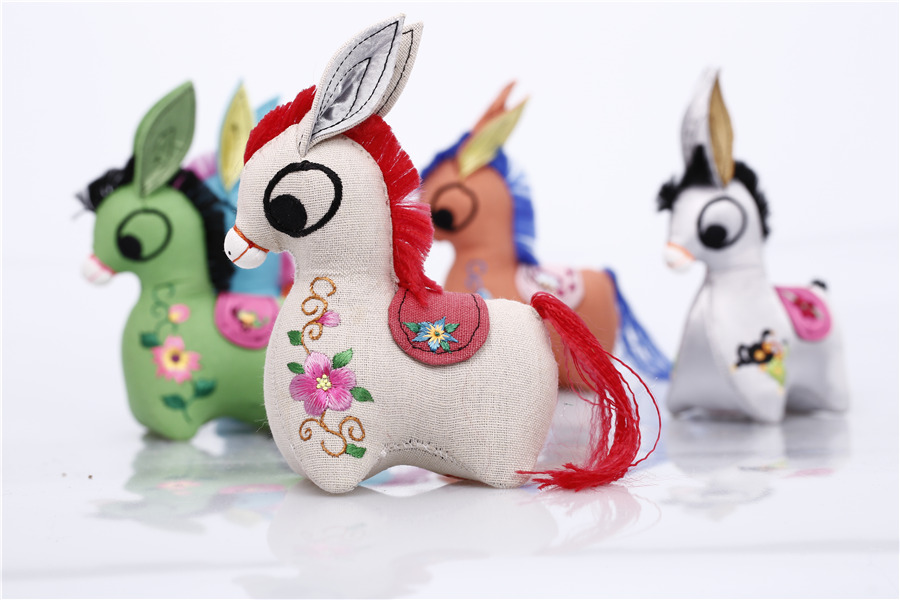
Qingyang Sachets
Introduction
Qingyang Sachets are a renowned traditional handicraft from Qingyang city in Gansu province, Northwest China. With a rich history spanning over 800 years, these sachets are both a cultural artifact and a contemporary product, embodying the adaptability of folk art to modern aesthetics and consumer markets. Known for their intricate designs and aromatic fillings, Qingyang sachets serve various symbolic purposes such as to worship totems, ward off evil spirits, and express hopes for safety, fertility, love, and a better life.
Historical Background
The history of Qingyang sachets dates back to antiquity. The oldest known Qingyang sachet, discovered in Huachi county in an ancient temple constructed during the Song Dynasty (960-1279), is over 800 years old. These sachets have been recognized for their cultural significance and were listed as a national intangible cultural heritage in 2006. Historically, sachets were considered items to prevent plague and repel snakes, as noted in the Huangdi Neijing (Inner Canon of Yellow Emperor), a foundational text in traditional Chinese medicine.
Craftsmanship and Design
Qingyang sachets are distinguished by their handmade silk pouches, which are filled with Chinese herbal medicines and embroidered with colorful patterns. These designs range from depictions of vegetables to representations of the 12 Chinese zodiac animals. The craftsmanship involves a vast collection of designs using delicate silk threads and natural fragrant herbs, creating a sensory experience that is both visual and olfactory.
Cultural Significance and Revival
The revival of Qingyang sachets is attributed to efforts by individuals like Liu Lanfang, an inheritor of the craft and manager of a local sachet-making company. Liu has been pivotal in transforming Qingyang sachets from a traditional craft into a profitable business that empowers rural women by providing them with employment opportunities. Her company has sold over 300,000 sachets annually, with many exported to countries including the United States, Germany, Italy, and Belarus.
To preserve the relevance of Qingyang sachets in today's world, Liu and her team have developed new designs while maintaining the craft's original style. These innovations include creating sachets with more vivid colors and varied patterns, such as a cartoonish donkey-shaped sachet with a fluffy tail, pointed ears, big round eyes, and a cute smile. Such designs have proven popular in tourism product competitions and are even used as mascots for donkey farming bases.








